
Best Fabrics For Jewellery Display At Exhibitions: Velvet, Suede Or Satin?
Velvet, suede and satin compared for jewellery exhibition stalls: how each looks under stall lighting, how it lasts through a multi-day show, which jewellery it suits and which colours to choose.
20 Nov 2026 · 2 min read
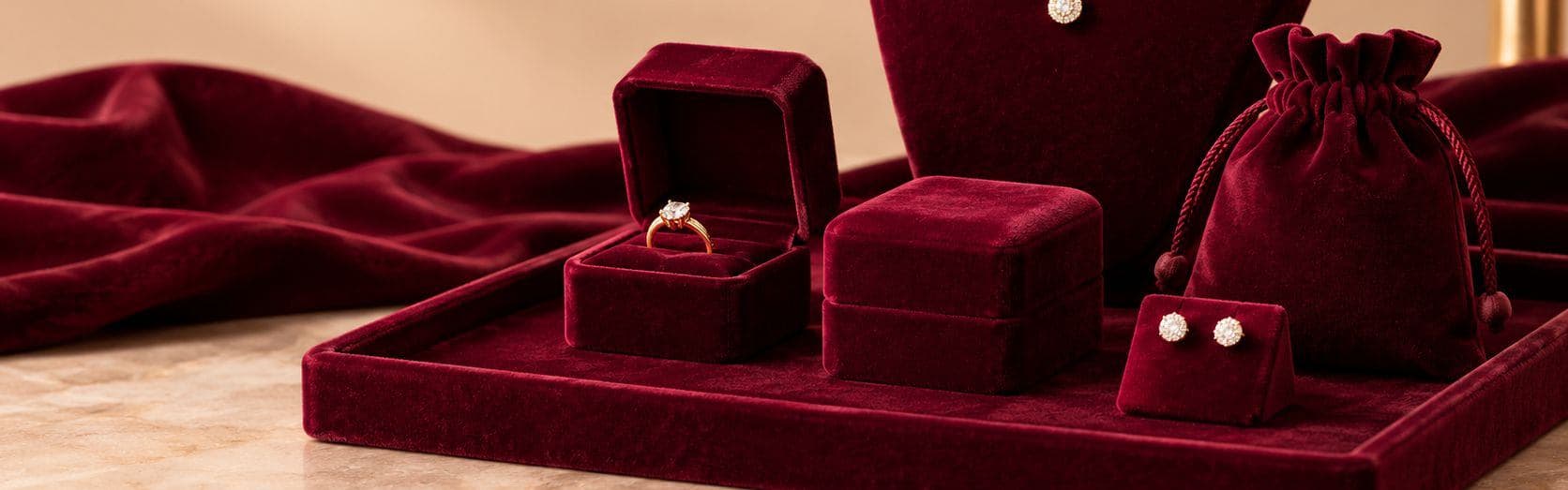
At a jewellery exhibition, a buyer decides in a few seconds whether your stall is worth stopping at. Before they read your brand name or ask a price, they see your pieces against a background, and that background is fabric. The right jewellery display fabric makes a simple chain look like it belongs in a showroom. The wrong one throws glare, collects lint by lunchtime and makes fine work look ordinary.
Velvet, suede and satin are the three fabrics exhibitors ask about most. This guide compares them for exhibition use: how each behaves under hall lighting, how it survives several days of setting up and packing away, which jewellery it suits and which colours to choose.
Quick answer: which fabric is best for jewellery display?
For most exhibition stalls, microfibre suede is the best all-round fabric for trays, pads and busts. Velvet is the best choice for bridal, heritage and high-value pieces. Satin is best kept for drapes, backdrops and box linings, not for the surface your jewellery sits on.
- Velvet: the richest look and the strongest contrast, but it shows lint and pressure marks, so it needs care every day.
- Suede (microfibre): matte, clean and hard-wearing. It is the easiest fabric to keep looking new across a multi-day show.
- Satin: the lowest cost and it drapes well, but it is too shiny and too slippery to use directly under jewellery.
Why display fabric matters more at an exhibition than in a showroom
A showroom controls its lighting, its dust and how often a tray is handled. An exhibition hall does none of that for you.
- Lighting is harsh and mixed. Your spotlights compete with the hall's overhead lights, so any fabric with a shine shows bright patches.
- Halls are dusty. Carpet fibre, packing material and constant footfall mean dark fabrics show specks within hours.
- Displays are handled all day. Most exhibitors lock their stock away every night and lay it out again each morning, so trays are stacked, carried and re-dressed many times.
- Buyers compare you with the next stall. A trade buyer walks past dozens of stalls in a day, and a tired-looking tray gets noticed.
So the question is not only which fabric looks best on the first morning. It is which one still looks good on the last afternoon.
Velvet for jewellery display
Velvet is the classic jewellery display cloth. Its raised pile absorbs light instead of reflecting it, so the metal and stones become the brightest things in the buyer's view. That is why black velvet is still the default background for diamonds.
Where velvet works best
- Bridal sets, kundan, polki and temple jewellery, where a rich, traditional look supports the price.
- Diamonds and solitaires on black or navy.
- Necklace busts and neck forms. The pile grips, so pieces stay where you place them.
- Hero pieces in a showcase at eye level.
What to watch out for
- Lint and dust show clearly on dark velvet. Keep a lint roller at the stall.
- The pile crushes. Stacked trays and heavy pieces leave marks that look like stains under spotlights.
- Cheap velvet sheds. Loose fibres cling to prongs and chains. Rub a sample firmly with your thumb before you buy. If fibres come away, choose another one.
- Quality varies a lot. A dense, short pile (often sold as micro velvet) looks sharper than a long, loose pile, which turns patchy when it is brushed in different directions.
Suede for jewellery display
In display work, suede almost always means microfibre suede, also sold as faux suede or suedette. It is not leather. It has a very short, even nap and a matte finish, somewhere between the depth of velvet and a plain flat cloth.
Where suede works best
- Trays and pads that are handled all day. The short nap does not crush the way velvet pile does.
- Modern, lightweight and daily-wear collections, where a clean look suits the product better than a heavy traditional one.
- Silver and diamond jewellery, on black, charcoal or grey.
- Loose gemstones on light, neutral shades, where buyers need to judge colour accurately.
- Brands that want one consistent look across trays, busts, ring rolls and the counter top.
What to watch out for
- Liquids and oils leave marks. Hand cream, sanitiser and tea all spot the surface, and light colours show it first.
- Light shades pick up dirt from handling. Carry spare pads if you choose beige or ivory.
- It reads as modern and understated. For heavy bridal sets, some buyers expect the depth of velvet.
- Avoid genuine suede leather under silver. Leather can carry residues from tanning that speed up tarnish. Microfibre suede does not have this problem.
Satin for jewellery display
Satin is a weave, not a fibre. Its threads float across the surface, which gives the smooth shine. It is inexpensive, comes in every colour and drapes beautifully, which is why you see it at so many stalls. Directly under jewellery, though, it causes problems.
- The shine competes with the jewellery. Under spotlights, satin throws bright streaks that pull the eye away from the piece.
- It is slippery. Chains slide, earrings tip over and one nudge to the tray undoes your layout.
- Creases show. Every fold from packing is visible under stall lighting.
- It snags. Prongs and clasps catch the weave and leave pulled threads.
Where satin does work
- Table skirts, back-wall drapes and ceiling swags, as a background away from direct spotlights.
- The lining of the boxes and pouches you hand over with an order.
- Ivory or white satin under pearls inside a presentation box, where a soft glow is the look you want.
- Fashion and imitation jewellery stalls on a tight budget. Choose a matte satin and keep it stretched tight.
Velvet vs suede vs satin at a glance
| Factor | Velvet | Suede (microfibre) | Satin |
| Look | Deep, rich, traditional | Matte, clean, modern | Glossy, soft |
| Glare under spotlights | None | None | High |
| Lint and dust | Shows the most | Shows little | Shows little |
| Wear over a multi-day show | Medium, the pile crushes | High | Low, it creases and snags |
| Grip | High | Good | Poor |
| Relative cost | Medium | Medium to high | Lowest |
| Best used for | Bridal, heritage and hero pieces | Trays, pads and busts across the stall | Drapes, backdrops and box linings |
Which fabric suits which jewellery?
- Diamond and solitaire jewellery: black, charcoal or navy, in velvet or suede.
- Plain gold, antique and temple jewellery: maroon, deep green or navy velvet.
- Kundan, polki and bridal sets: velvet in deep jewel tones.
- Silver and oxidised jewellery: black or charcoal microfibre suede.
- Pearls: dark velvet or suede. White pearls on a white cloth disappear from a distance.
- Coloured gemstones and loose stones: white, ivory or light grey suede, so the colour of the stone reads true.
- Rose gold and lightweight daily wear: beige, ivory or grey suede.
- Imitation and fashion jewellery: microfibre suede or leatherette for the trays, satin for the drapes.
How to choose the right colour
Colour matters as much as the fabric. The rule is contrast: the background should be clearly darker or clearly lighter than the piece, and never close to the colour of the metal.
- Black: the strongest contrast for diamonds, silver and platinum. Dark stones such as blue sapphire, garnet and onyx lose their outline on it, and it shows dust the most.
- Navy and royal blue: softer than black. They suit diamonds and white gold, and they flatter yellow gold too.
- Maroon and deep red: the traditional Indian choice for gold. Buyers read it as bridal straight away.
- Bottle green: a strong alternative for gold and polki when every neighbouring stall is in red.
- Ivory, beige and grey: a modern look that suits coloured stones and rose gold. These shades show handling marks sooner.
- Avoid: yellow, mustard or orange under gold, pure white under silver and diamonds, and printed or brocade cloth under anything.
Limit the stall to two fabric colours, one for the displays and one for the backdrop. More than that and the stall starts to look like a cloth shop.
Match the fabric to your stall lighting
- Warm white light flatters gold. Cool white light brings out diamonds and silver. Many jewellery stalls use both, in different showcases.
- Matte fabrics such as velvet and suede work under any spotlight. Keep glossy fabric away from direct light.
- Dark fabric absorbs light. A black showcase needs more light than a beige one to look equally bright.
- Before you order forty trays, take a fabric sample and a few pieces and look at them under the kind of light your stall fabricator will fit.
Practical tips for exhibition days
- Carry spares. One spare pad for every four or five on display is a sensible ratio.
- Pack a cleaning kit: a lint roller, a soft brush and a microfibre cloth. Clean every tray each morning before the hall opens.
- Never stack velvet trays face to face. Put tissue or a thin foam sheet between them.
- Steam drapes, do not iron them. A hot iron flattens velvet pile for good.
- Stretch every fabric tight. Loose cloth looks cheap and catches on clasps.
- Buy from one roll. Shade differences between batches show up under spotlights.
- Read the exhibitor manual. Many venues and organisers ask for flame-retardant material for drapes and stall fabric.
- Brief your stall staff. Clean, dry hands or gloves, and no hand cream before handling the trays.
For everything else you need to carry, see our complete trade show checklist.
Common mistakes to avoid
- Putting shiny satin directly under spotlights.
- Matching the fabric to the metal, such as gold on mustard or silver on white.
- Mixing too many colours and textures in one stall.
- Buying the cheapest velvet and finding lint on every piece by the second day.
- Overcrowding the tray. Fabric only works when buyers can see it, so leave space around each piece.
- Forgetting the backdrop. The fabric wall behind your counter is seen from the aisle long before the trays are.
Frequently asked questions
Which fabric is best for jewellery display?
Microfibre suede is the best all-round choice for exhibition trays, pads and busts, because it is matte, low on lint and hard-wearing. Velvet gives a richer look for bridal and high-value pieces. Satin is better as a drape than as a display surface.
Which colour velvet is best for gold jewellery?
Maroon, deep red, navy and bottle green all work well with gold. Avoid yellow and mustard, which reduce the contrast. For diamond-set gold, black or navy gives the sharpest result.
Is suede better than velvet for jewellery display?
For durability and easy care, yes. Suede does not crush and it shows far less lint. Velvet still looks deeper and more luxurious, so many exhibitors use suede for their working trays and velvet for a few hero pieces.
Can I use satin to display jewellery?
You can, but not directly under spotlights. Satin reflects light, creases easily and lets pieces slide. Use it for table skirts, backdrops and box linings.
How do I keep display fabric clean during a multi-day exhibition?
Go over every tray with a lint roller each morning, keep a soft brush and a microfibre cloth at the stall, store trays with tissue between them overnight and carry spare pads to swap in for any that get marked.
The bottom line
If you want one simple setup, use black or navy microfibre suede for your trays and pads, velvet busts for your hero pieces and satin only for the drapes. Then test all of it under your actual stall lights before the show, because fabric that looks perfect in daylight can look very different under spotlights.
Planning your next show? Browse upcoming jewellery exhibitions in India on The Expo Company, and read our guide on how much it costs to exhibit at a trade show in India to plan your stall budget.
Get The Expo Company app
Related articles
All articles
How To Generate Leads At A Trade Show: Proven Tips For Indian Exhibitors
25 Aug 2026 · 2 min read

How To Exhibit At A Trade Show In India: A Step-by-step Guide For First-time Exhibitors
25 Aug 2026 · 2 min read

Delhi Vs Mumbai Vs Bengaluru For Exhibitors: Cost, Footfall And Audience Compared
15 Oct 2026 · 2 min read

How Much Does It Cost To Exhibit At A Trade Show In India?
12 Oct 2026 · 2 min read